
Guests rely on their phones more than ever. They use them to check digital menus, place orders, make payments, find directions, share photos, check messages, and stay connected with friends and family.
A low battery can quickly become a problem. Guests may start looking for a wall outlet, ask staff for a charger, or leave their table to find a place to charge.
A restaurant phone charging station can solve this simple problem. It gives guests a convenient way to keep their phones powered while they eat or drink.
For restaurants and bars, charging is more than a technology feature. It can become part of the guest experience. The key is to provide charging without creating cable clutter, security concerns, or a design problem.
So, how can restaurants provide easy phone charging while keeping the space clean and functional?
Why Should Restaurants Offer a Phone Charging Station?
A restaurant cell phone charging station can add a useful service without changing how guests enjoy their visit. It can also work well with the digital tools that many restaurants already use.
The right setup can support convenience, comfort, and a more modern hospitality experience.
Improve the Guest Experience Without Disrupting the Dining Experience
Guests often keep their phones close during a meal. They may use a phone to view a menu, place an order, pay a bill, or communicate with someone.
When the battery is low, this can create stress. Guests may need to find an outlet or ask staff for help.
A restaurant charging station can keep charging close to the guest. They can place the phone in a set charging area and continue their meal.
Wireless charging can make this even easier. There is no need for a long cable to run across a table or bar surface. Kew Labs positions its UTS 2 solution for bars and restaurants as a way to let guests charge from their seats without wires going over food.
Encourage Longer Dwell Time
Phone battery anxiety can affect how comfortable guests feel during a visit. A guest who needs to find a charger may be more focused on their battery than on their meal or drink.
A convenient charging point can help guests stay relaxed. It can also support longer visits in suitable settings such as bars, lounges, cafés, and casual dining spaces.
This does not mean charging will always increase spending. Guest behavior depends on many factors.
However, keeping guests comfortable and connected can create more opportunities for another drink, dessert, another order, or simple social engagement.
Create a More Convenient, Technology Friendly Restaurant
Restaurants now use many digital tools. These can include QR menus, online ordering, contactless payments, loyalty programs, and Wi Fi access.
A phone charging station fits naturally into this environment. It supports the device that guests use to access many of these services.
Kew Labs focuses on hidden wireless charging that can be built into surfaces. Its restaurant and bar application is designed for hospitality spaces where a clean look and easy charging are important.
You can learn more about the Kew Labs solution for bars and restaurants here: Kew Labs restaurant and bar charging solution
What Features Should You Look for in a Restaurant Charging Station?
Not every phone charger is suitable for a restaurant. A commercial phone charging station needs to fit the space, support common devices, and work well with the restaurant design.
It should also be easy for guests to understand and simple for staff to manage.
Wireless Charging for a Cleaner Guest Environment
Cables can quickly make a dining table or bar look untidy. They can also get in the way of food, drinks, menus, and other items.
A wireless charging station can reduce this problem. Guests can place a compatible phone over the charging point without connecting a cable.
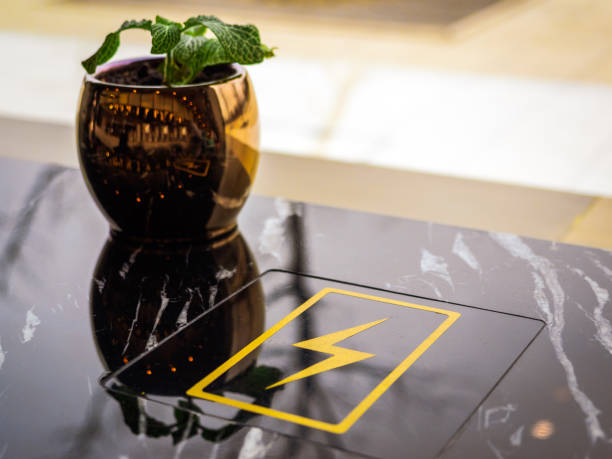
Kew Labs UTS 2 is designed to sit below non metallic surfaces. This allows the charger to remain hidden while the charging location stays visible through a locator or surface design.
This approach can help restaurants keep charging practical without making it look like an added device.
Qi Compatibility and Device Support
Device compatibility is an important part of choosing a restaurant phone charger.
Qi is a common wireless charging standard. A restaurant should clearly explain which devices can use its charging points.
Kew Labs states that the UTS 2 supports Qi enabled devices, including iPhones and most Android smartphones. It can also support certain wireless charging accessories.
Clear signs can help guests understand how to use the charging station. This can reduce confusion and make the service easier to use.
Capacity, Durability and Power Planning
The number of charging points should match the space and expected demand. A small café may need only a few points, while a busy bar may need several.
Power planning is also important. The installation should account for the number of chargers, available power, cable routing, and the surface where the chargers will be installed.
Kew Labs states that multiple UTS 2 units can be connected through USB C power systems. Its restaurant application page gives the example of multiple chargers installed along a bar.
This can make a commercial phone charging station easier to plan for larger hospitality projects.
Where Should a Restaurant Install a Phone Charging Station?
Location can have a major effect on how useful a charging station becomes.
The best location is usually where guests naturally sit, place their phones, and spend time. The charging point should also be easy to see without becoming a visual distraction.
Restaurant Tables and Dining Counters
Dining tables and counters are natural locations for charging. Guests already place their phones on these surfaces.
A built in charging point can make charging feel like part of the table rather than a separate service.
Restaurants should consider phone placement, seating patterns, cleaning needs, and staff workflow when selecting locations.
The goal is simple. Guests should be able to find the charging point and use it without interrupting their meal.
Bar Tops and High Dwell Areas
Bars are another strong location for phone charging. Guests may spend a long time at the bar while talking, drinking, working, or waiting for friends.
A bar phone charging station can be placed along the counter so several guests can charge at the same time.
Kew Labs has demonstrated installations with multiple UTS 2 units built into bar surfaces. Its restaurant application also shows branded charging indicators used as part of the bar design.
Placement During Renovation or New Construction
Charging is often easier to plan during a renovation or new build. Designers, contractors, fabricators, and restaurant owners can consider the charger before the surface is finished.
Surface thickness matters for hidden wireless charging. Kew Labs states that its UTS 2 is designed for an 8 mm to 12 mm surface range, while its UTS 2 6MM model is designed for 6 mm surfaces. Existing thicker surfaces may need preparation before installation.
Planning early can help avoid unnecessary changes later.
How Can Restaurants Make Charging Stations Secure, Branded and Operationally Practical?
A charging station should fit the way a restaurant operates. It should not create extra work for staff or introduce unnecessary clutter.
The design should also support the identity of the venue.
Wireless vs. Cable Based Charging
Cable based chargers can be useful, but they may create visible wires and require guests to select the right connector.
Portable charging units can offer flexibility, but they may need charging, storage, cleaning, and management by staff.
Charging lockers can provide another option for guests who want to leave their phone in a secure location.
Integrated wireless charging takes a different approach. The charging hardware can sit beneath a surface, keeping the technology less visible.
The right option depends on the restaurant layout, guest needs, budget, and installation plan.
Protect the Restaurant’s Design and Brand
Technology should not take away from a restaurant’s design.
A charging point can be made part of the surface. It can also use a small visual indicator to show guests where to place their phone.
Kew Labs offers customizable charging locator stickers. Restaurants can use their own branding and design to help charging points blend into the space.
This is useful for restaurants that want practical technology without the look of an aftermarket accessory.
Combine Charging With QR Codes, Ordering and Wi Fi
A charging location can also become a useful digital touchpoint.
For example, a QR code could lead guests to a digital menu, ordering page, payment system, loyalty program, or Wi Fi information.
Kew Labs promotes QR and NFC integration with its bar charging solutions.
This can connect the physical charging experience with the restaurant’s digital experience in a simple way.
Best Practices for Implementing a Restaurant Phone Charging Station
Use this checklist before selecting and installing a restaurant charging station:
Assess where guests naturally sit and place their phones.
Estimate charging demand during busy periods.
Choose charging technology that suits common guest devices.
Plan power access before installation.
Check the surface thickness and material.
Make charging locations easy to identify.
Match the charging locator with the restaurant brand.
Consider QR or NFC features where they add value.
Include cleaning and maintenance in the operating plan.
Test every charging point before opening it to guests.
A simple plan can help prevent installation problems and improve the guest experience from day one.
Is a Restaurant Phone Charging Station Worth the Investment?
The value of a restaurant charging station should not be measured only by direct revenue.
For many restaurants, the main value is convenience. A guest who can easily charge a phone may have a more comfortable and positive visit.
Consider the Guest Experience Value
Hospitality is built around small details. Easy charging can be one of those details.
It can show guests that the restaurant understands how they use technology during a meal or drink.
A well placed charging point can also reduce the need for guests to ask staff for chargers or search for power outlets.
Consider Dwell Time and Additional Guest Engagement
A charged phone can help guests stay connected during their visit.
They can continue using digital menus, place additional orders, share content, make plans, or stay in touch with friends.
There is no guarantee that charging will increase sales. However, making guests more comfortable can create more opportunities for engagement.
Consider the Long Term Restaurant Design
A charging station can be treated as part of the restaurant design rather than a temporary accessory.
Hidden wireless charging can be integrated into tables, counters, bars, and other suitable surfaces.
Kew Labs describes the UTS 2 as a hidden wireless charger designed for installation under non metallic surfaces. Its technical materials list compatible materials such as wood, stone, plastic, and glass.
This makes charging worth considering during furniture design, remodeling, and new construction.
Conclusion: Turn Phone Charging Into a Better Hospitality Experience
A restaurant phone charging station can be more than an emergency service for guests with low batteries. When planned well, it can support comfort, convenience, and a technology friendly hospitality experience. The best restaurant charging station is one that guests can easily find and use while remaining unobtrusive to the restaurant’s design and daily operations. By choosing the right charging technology, planning power and surface requirements, selecting high dwell locations, and integrating the charging point into the restaurant’s visual identity, owners and designers can create a useful amenity that feels like a natural part of the space. Kew Labs offers hidden wireless charging solutions for bars and restaurants, with support for project planning and technical requirements.
Contact us today your restaurant phone charging project, renovation, furniture design, or new construction requirements.
Frequently Asked Questions
A restaurant phone charging station is a dedicated solution that allows guests to recharge their smartphones while dining or drinking.
It can be a portable charging unit, a cable based setup, a charging locker, or an integrated wireless charging system.
An integrated wireless charger can be installed below a suitable surface. This keeps the hardware hidden while giving guests a clear place to charge.
Restaurants can offer charging as a simple guest convenience.
It can help guests stay connected during meals and drinks. It can also support a technology friendly experience alongside QR menus, digital ordering, contactless payment, and Wi Fi.
The main goal should be better hospitality rather than guaranteed extra revenue.
High dwell areas are usually a good starting point.
Dining tables, counters, bar tops, lounges, and waiting areas can all be considered. The final location should provide easy access while avoiding staff workflow problems.
Restaurants should also consider visibility, power access, surface material, cleaning, and expected demand.
Wireless charging can be a strong option for restaurants that want fewer visible cables.
It can also work well with furniture and surface design. However, the best choice depends on the layout, devices used by guests, surface construction, power access, and installation requirements.
Yes. A charging location can be designed to match the restaurant’s visual identity.
Kew Labs states that its charging locator stickers can be customized with restaurant branding and design. Charging indicators can therefore become part of the overall surface design rather than looking like an unrelated accessory.
Yes. A charging location can potentially include a QR code.
Depending on the implementation, the code could direct guests to a digital menu, ordering page, payment system, Wi Fi information, or another digital service.
Kew Labs also promotes QR and NFC integration with its bar charging solutions.
Potentially, yes.
Installation depends on the surface material and thickness. Kew Labs states that its UTS 2 can be retrofitted when the surface meets the applicable 8 mm to 12 mm thickness requirement. Thicker existing surfaces may need preparation before installation.
For this reason, charging should be discussed early with the designer, fabricator, contractor, or installation team.
There is no universal number.
The right quantity depends on seating capacity, bar length, peak occupancy, guest behavior, and the locations where guests naturally place their phones.
A small venue may need only a few charging points. A larger bar or restaurant may benefit from multiple points placed across high traffic areas.
The goal is to provide useful access without installing more charging points than the space needs.