
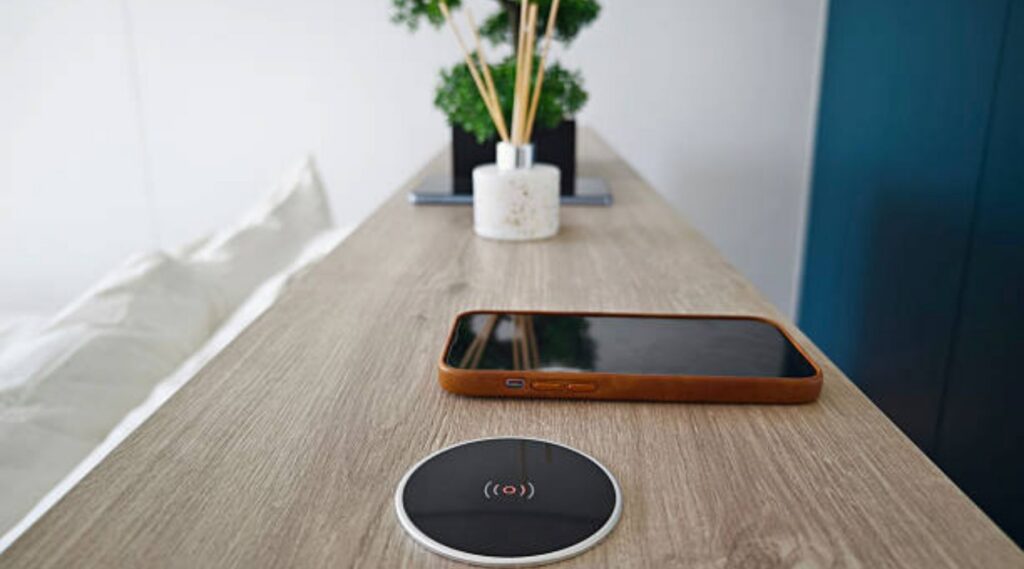
Modern kitchens are no longer used only for preparing meals. They are often places where people work, study, entertain guests, listen to music and stay connected throughout the day. As a result, smartphones, tablets, earbuds and other devices frequently end up on kitchen counters while they charge.
A kitchen charging station provides a dedicated place to keep these devices powered without allowing charging cables and adapters to take over the workspace. Traditional solutions may use wall outlets, USB ports or visible charging docks, while newer options can integrate charging directly into the kitchen design.
A hidden kitchen charging station takes this concept further by concealing the charging hardware beneath a suitable countertop. This allows the countertop itself to become a convenient charging area while maintaining a cleaner appearance. For homeowners, kitchen designers and people planning renovations, hidden wireless charging can be considered as part of the overall kitchen layout rather than added later as an accessory.
What Is a Kitchen Charging Station and How Does It Work?
A kitchen charging station is simply a designated location where compatible devices can be charged conveniently. The setup can range from a basic electrical outlet or USB port to a built-in charging drawer or an integrated wireless charging system.
Understanding Kitchen Charging Stations
Traditional charging stations often use visible cables connected to electrical outlets or USB charging ports. Charging drawers can provide a more organised alternative by keeping cables and devices inside a cabinet.
Wireless charging provides another option. Instead of connecting a cable directly to the phone, users place a compatible device over the charging area. With a hidden installation, the charging hardware can be positioned beneath the countertop so there is no visible charging pad taking up valuable surface space.
The best arrangement depends on how the kitchen is used, how many devices need charging and where people naturally place their phones.
How Hidden Wireless Charging Works
A hidden wireless charging system uses electromagnetic power transfer between a transmitter inside the charging module and a compatible receiver inside the device. The transmitter is installed beneath the countertop, while the phone is positioned above the designated charging zone.
The countertop material therefore becomes an important part of the installation. Non-metallic materials can allow suitable wireless charging systems to operate through the surface, but thickness and construction still need to meet the charger’s requirements.
Kew Labs explains that its UTS-2 is designed to turn suitable non-metallic surfaces into hidden wireless charging areas and supports applications such as kitchen countertops and islands. This approach allows charging functionality to become part of the kitchen surface rather than another object placed on it.
Where Should You Install a Kitchen Charging Station?
The right location depends on how people use the kitchen. A charging area should be convenient to reach while remaining away from food preparation, water and excessive heat.
Kitchen Island
Kitchen islands can be useful locations because they are often central areas where family members gather. People may sit around the island, prepare food nearby or use their phones while cooking.
A charging station can be positioned where users naturally place their devices. Larger islands may also accommodate more than one charging point, making them useful for households with several smartphones.
Charging zones should be kept away from sinks, cooking appliances and areas where water or heat could create unsuitable conditions for electronic equipment.
Main Countertops
A main countertop can provide another practical location for integrated charging. Many people already use their phones in the kitchen for recipes, timers, music, calls and messages.
A hidden charging zone means the countertop can remain available for these everyday activities without requiring a visible charging pad. When planning the location, consider existing electrical infrastructure and the cabinet space beneath the counter.
The charging position should also be easy for users to identify without interfering with normal food preparation or cleaning.
Breakfast Bars and Seating Areas
Breakfast bars and kitchen seating areas can be particularly useful for charging because people often spend extended periods there. Family members may sit with a phone, tablet or other compatible device while eating, studying or working.
A charging station integrated into the surface can provide convenient access without adding another accessory to the counter. Larger seating areas can also be planned with multiple charging points.
Pantry, Home Office or Utility Areas
Connected kitchen spaces such as pantries, utility rooms and home office areas may also benefit from dedicated charging. The best solution will depend on whether the space needs wireless charging, USB charging or conventional electrical outlets.
When planning these areas, consider where devices are normally left and how much charging infrastructure is actually required. A simple solution may be sufficient for some locations, while a concealed system may be more suitable where maintaining a clean design is important.
What Should You Look for in a Kitchen Charging Station?
Choosing a charging solution involves more than deciding where the charger should be placed. The countertop material, thickness, power access and intended devices all need to be considered before installation.
Countertop Material Compatibility
Not every countertop is automatically suitable for concealed wireless charging. The material between the charging module and device can affect how effectively power is transferred.
Non-metallic surfaces such as wood, stone, plastic and glass can be compatible with suitable wireless charging systems. Metal can interfere with wireless charging, so metal components or layers within the countertop construction should be considered during planning.
Kew Labs states that its charging technology is compatible with non-metallic materials including wood, stone, plastic and glass, with specific surface and countertop approvals available for some applications. Always check the exact technical requirements of the selected charger before modifying a countertop.
Natural materials like marble and quartzite can also contain metallic material, which can interfere with signals. The official recommendation is to run a test piece on natural materials like this.
Surface Thickness
Countertop thickness is another important consideration because it determines the distance between the charging transmitter and the phone’s receiver coil.
If the surface is outside the charger’s effective operating range, charging may become unreliable or may not work as intended. This is why the exact thickness at the installation point should be checked rather than relying only on general countertop specifications.
For a new kitchen or renovation, countertop fabricators can prepare the surface according to the charging system’s requirements before the countertop is installed.
Power and Cable Planning
Wireless charging does not mean that the charging module itself does not need electricity. The charger still requires a suitable power connection, which needs to be planned beneath the countertop or within the kitchen cabinetry.
Cable routing should be considered during the design stage. This is particularly important when several charging points are planned because the electrical and connection requirements may be different from a single charging module.
Kew Labs provides wiring guidance for connecting multiple UTS-2 chargers through USB-C hubs, making multi-point installations possible when the appropriate power and connection setup is planned.
Safety and Ventilation
Charging hardware should always be installed according to the manufacturer’s requirements. Appropriate ventilation and clearance can help manage heat generated during operation.
The charging module should also be positioned away from unsuitable sources of heat and areas where water exposure is likely. The installation should provide appropriate access where maintenance or replacement may eventually be required.
Considering these factors during kitchen planning is easier than trying to correct them after the countertop has been installed.
Why Choose a Hidden Kitchen Charging Station?
A hidden charging solution can make charging more integrated with the kitchen rather than treating it as an additional appliance or accessory.
Reduce Countertop Clutter
Visible charging pads, adapters and loose cables can quickly make a busy kitchen countertop feel untidy. A hidden charging system moves the charging hardware underneath the surface.
This leaves more visible space for food preparation, appliances and everyday kitchen activities. It can also reduce the number of loose cables running across the countertop.
Maintain a Clean Kitchen Design
A hidden kitchen charging station can allow technology to blend into the kitchen instead of becoming a visible feature. This can be particularly useful in minimalist and contemporary kitchen designs.
The countertop remains visually consistent while still providing a practical charging function. For designers, this creates an opportunity to incorporate technology without adding another object to the finished space.
Make Everyday Charging More Convenient
A designated charging zone gives household members a predictable place to charge compatible devices. Instead of searching for an available outlet or moving a charging pad around the kitchen, users can simply place their device over the intended area.
This can be useful while cooking, working from home, entertaining guests or relaxing in the kitchen. Multiple charging points can also make shared spaces more practical for households with several devices.
Add Functionality During a Renovation
A renovation provides an opportunity to plan charging before the kitchen is completed. The countertop design, cabinet layout, electrical supply and charging locations can all be coordinated from the beginning.
Kitchen manufacturers, countertop fabricators, electricians and installers can work together to ensure the charging system has the required surface preparation and power connection.
How to Plan a Built-In Kitchen Charging Station
Planning a built-in charging station before installation can make the finished result more convenient and reliable. Start by identifying where people naturally leave and use their devices.
Consider whether one charging area is enough or whether several points would be more appropriate. Then check the countertop material and thickness against the charging system’s requirements.
Power access and cable routing should also be planned before the countertop is fabricated. If possible, test the intended charging position with the devices and cases that will actually be used.
A subtle marking or indicator can help users locate the charging zone. Kew Labs’ installation documentation recommends calibrating the charging position and using an indicator to identify the centre of the charging area.
Recommended Solution: Kew Labs UTS-2
The Kew Labs UTS-2 is an example of an invisible wireless charging solution designed for integration into suitable furniture and surfaces. Its application includes kitchen countertops and islands where concealed charging can help maintain a clean surface.
The system uses a USB-C power connection and is designed for suitable non-metallic materials. Its installation requirements should be checked against the specific countertop material and thickness before fabrication.
For homeowners, kitchen designers and renovators considering an integrated solution, the Kew Labs kitchen charging station application provides further information about using invisible wireless charging within kitchen surfaces.
Common Mistakes to Avoid
Planning a charging station at the same time as the kitchen design can help avoid many installation issues. Problems often occur when the charging system is selected after the countertop has already been fabricated.
Some common mistakes include:
Not checking countertop material compatibility.
Ignoring the required surface thickness.
Positioning charging areas too close to water or high heat.
Forgetting to plan the required power connection.
Failing to consider phone alignment.
Adding the charging system after countertop fabrication.
Not testing with the devices and cases that will actually be used.
Installing multiple chargers without planning their power and wiring requirements.
These checks are relatively simple but can make a significant difference to the final installation.
Conclusion
A kitchen charging station can make everyday device charging more convenient while helping reduce countertop clutter. Traditional outlets, USB ports and charging docks can work well for many kitchens, but hidden wireless charging provides a more integrated alternative for homeowners who want technology to blend into the furniture. A hidden kitchen charging station can be installed beneath suitable non-metallic countertops, allowing compatible devices to charge while the visible surface remains clear and functional. Successful installation depends on countertop material, surface thickness, power access, charging position, ventilation and proper planning. For new kitchens and renovations, charging should be considered alongside the countertop and electrical design rather than added as an afterthought. Explore Kew Labs’ wireless charging solutions for kitchen countertops and islands to understand how integrated charging can be incorporated into a kitchen design.
If you are planning a kitchen renovation or looking for an integrated way to keep devices powered, contact us today kitchen charging station solutions for countertops and islands.
FAQs
A kitchen charging station is a dedicated area for charging phones and other compatible devices. It can use electrical outlets, USB ports, charging drawers, visible wireless charging pads or concealed wireless charging technology.
A hidden kitchen charging station is a charging system where the charging hardware is concealed beneath a suitable kitchen countertop or surface. Compatible devices can then be placed over the designated charging area without requiring a visible charging pad.
Yes. Suitable wireless charging systems can be integrated beneath compatible non-metallic countertop materials. However, the surface material, thickness, charger specifications and installation requirements should be checked before installation.
Kitchen islands, breakfast bars and frequently used countertop areas can all be suitable locations. The ideal position depends on how the kitchen is used, where people normally place their phones and where a suitable power connection can be provided.
Yes. Larger islands can be designed with multiple charging points to support several users and devices. The appropriate power supply and connection system should be planned before installation.
Suitable systems can work through various non-metallic materials. Kew Labs lists wood, stone, plastic and glass among compatible materials for its technology, although specific countertop materials may have their own installation requirements.
Yes. The phone receives power wirelessly, but the charging module itself still requires a suitable electrical power connection. This means power and cable routing need to be included in the kitchen design.
Yes. A renovation can be an ideal time to plan a hidden charging system because the countertop, cabinets, power supply and charging locations can be coordinated before installation.
The charging hardware and charging pad can be hidden, but the system still requires a power connection beneath the countertop. Proper cable routing can keep most of the infrastructure out of sight.
Consider the countertop material, surface thickness, device compatibility, charging capacity, number of users, power requirements, installation method and available space. For integrated solutions, coordinate with the kitchen and countertop installer before fabrication.